

Future Launches
Scheduled orbital launches for the next 60 days, refreshed every 15 minutes. Dates and times shift often, so the status shows how firm each attempt is.
The next rocket launch is a Long March 2C, scheduled for 5 November 2026 at 04:00 PM UTC from Xichang Satellite Launch Center, People's Republic of China.
Tomorrow · Thursday, November 5

Next launch
01
days
10
hrs
10
min
19
sec
China Aerospace Science and Technology Corporation

Details TBD.
Time (UTC)
04:00 PM
Orbit
N/A
Launch site
Xichang Satellite Launch Center, People's Republic of China
Launch Complex 3 (LC-3/LA-1)
Friday, November 6

Galactic Energy
Galactic Energy's Ceres-2 Y3 flight, named Lifengxing, is the rocket's first return to flight after the 17 January maiden launch failed when a first-stage nozzle-liner support gave way. The four-stage vehicle is expected to fly from Jiuquan toward sun-synchronous orbit; the commercial payload has not been named.
Time (UTC)
11:35 PM
Provider
Galactic EnergyOrbit
N/A
Launch site
Jiuquan Satellite Launch Center, People's Republic of China
Launch Area 95A
Saturday, November 7

USSF-432

Classified U.S. Space Force payload on a Falcon 9 from Vandenberg Space Force Base's SLC-4E into low Earth orbit. The first-stage booster, on its eighth flight after GPS III-8 and six Starlink missions, will attempt a landing on the Of Course I Still Love You droneship in the Pacific.
Sunday, November 8

SatNet LEO Group TBD?
A batch of 9 Low Earth Orbit communication satellites for the Chinese state owned SatNet constellation operated by the China Satellite Network Group. The constellation will eventually consists of 13000 satellites.
Time (UTC)
08:25 PM
Orbit
LEO
Payload
Communications
Launch site
Wenchang Space Launch Site, People's Republic of China
Commercial LC-2
Tuesday, November 10
USSF-627
A classified U.S. Space Force payload will ride a Falcon 9 from Vandenberg SLC-4E to low Earth orbit, with the first stage aiming for an Of Course I Still Love You droneship landing in the Pacific. The mission is also listed as R-5; the official USSF designation is still TBD.
Friday, November 13
USSF-317
A classified U.S. Space Force mission from Vandenberg SLC-4E to low Earth orbit, listed as USSF-xxx (R-6) until a flight number is assigned. It continues the same Western Range Falcon 9 series as R-3 (USSF-385) and R-5; the spacecraft remain undisclosed.

Amazon Leo (LV-01)
ULA's first Vulcan Centaur flight for Amazon's Leo broadband constellation, carrying 45 satellites into low Earth orbit from Cape Canaveral. The mission debuts the LEO-optimized Centaur V upper stage and also serves as a certification flight for the configuration with the U.S. Space Force.
Time (UTC)
05:54 PM
Provider
United Launch AllianceOrbit
LEO
Payload
Communications
Launch site
Cape Canaveral SFS, FL, USA
Space Launch Complex 41
Saturday, November 14

The Mountain God Rises (iQPS Launch 10)
Rocket Lab's 11th dedicated Electron for iQPS will loft QPS-SAR-19, nicknamed YAMATSUMI-II, to a 575 km mid-inclined orbit from Mahia. The synthetic-aperture-radar satellite expands the Japanese company's commercial Earth-imaging constellation.
Provider
Rocket LabOrbit
LEO
Payload
Earth Science
Launch site
Rocket Lab Launch Complex 1, Mahia Peninsula, New Zealand
Friday, November 20
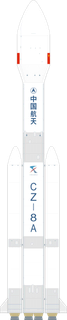
SatNet LEO Group TBD?
A batch of 9 Low Earth Orbit communication satellites for the Chinese state owned SatNet constellation operated by the China Satellite Network Group. The constellation will eventually consists of 13000 satellites.
Time (UTC)
11:00 AM
Orbit
LEO
Payload
Communications
Launch site
Wenchang Space Launch Site, People's Republic of China
Commercial LC-1
Monday, November 23

Amazon Leo (LE-04)

The fourth in a series of Ariane 6 launches dedicated to Amazon's Leo broadband megaconstellation, deploying another batch of Kuiper satellites to low Earth orbit from French Guiana as part of the network's planned buildout toward global internet coverage.
Provider
ArianespaceOrbit
LEO
Payload
Communications
Launch site
Guiana Space Centre, French Guiana
Ariane Launch Area 4
Tuesday, November 24
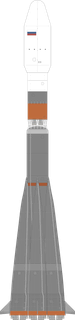
Progress MS-36 (97P)

Roscosmos will fly Progress MS-36 (NASA Progress 97), an uncrewed Energia cargo spacecraft, to resupply the International Space Station. After a Soyuz-2 launch from Baikonur Site 31/6, the ship is planned to dock at the station's Poisk nadir port.
Time (UTC)
05:03 AM
Orbit
LEO
Payload
Resupply
Launch site
Baikonur Cosmodrome, Republic of Kazakhstan
31/6
SatNet LEO Group TBD?
A batch of 9 Low Earth Orbit communication satellites for the Chinese state owned SatNet constellation operated by the China Satellite Network Group. The constellation will eventually consists of 13000 satellites.
Time (UTC)
07:00 AM
Orbit
LEO
Payload
Communications
Launch site
Wenchang Space Launch Site, People's Republic of China
Commercial LC-2
Wednesday, November 25

Shenzhou 24
Shenzhou 24 will carry three crew to the Tiangong space station, including Pakistan's first astronaut — either Muhammad Zeeshan Ali or Khurram Daud of SUPARCO — for a roughly one-week visit. The visitor is expected to return on Shenzhou 23, leaving one Shenzhou 23 taikonaut aboard for China's first year-long stay.
Orbit
LEO
Payload
Human Exploration
Launch site
Jiuquan Satellite Launch Center, People's Republic of China
Launch Area 91 (SLS-1 / 921)
Thursday, November 26

AT-Astra and Others (Spectrum Flight 3)

Third flight of Isar Aerospace's Spectrum from Andøya Spaceport, a dedicated launch of R-Space's AT-Astra (IOD-01)—the first commercial satellite fully built in Austria—to sun-synchronous orbit. AT-Astra will demonstrate ENPULSION's indium FEEP propellant, a SunBooster solar module and Synopsis Planet's star-tracker and debris sensor; Spectrum reached orbit on Flight 2 after a March 2025 maiden failure.
Time (UTC)
08:00 PM
Provider
Isar AerospaceOrbit
SSO
Payload
Technology
Launch site
Andøya Spaceport
Orbital Launch Pad
Sunday, November 29
Cygnus CRS-2 NG-25
Northrop Grumman's Cygnus NG-25 (NASA CRS-25) will deliver crew supplies and science to the International Space Station aboard a SpaceX Falcon 9. The enlarged Cygnus XL cargo craft will berth for unloading and can reboost the station before a destructive reentry at mission's end.
Time (UTC)
03:49 PM
Provider
SpaceXOrbit
LEO
Payload
Resupply
Launch site
Cape Canaveral SFS, FL, USA
Space Launch Complex 40
Monday, November 30
NROL-195
A Falcon 9 will loft NROL-195, a classified National Reconnaissance Office payload, from Vandenberg SLC-4E to low Earth orbit. The flight is the fifteenth batch of the NRO's proliferated reconnaissance constellation built by SpaceX and Northrop Grumman for imaging and other reconnaissance, with a planned landing at Landing Zone 4.
Provider
SpaceXOrbit
LEO
Payload
Government/Top Secret
Launch site
Vandenberg SFB, CA, USA
Space Launch Complex 4E
OneWeb 21
A Falcon 9 will loft the first 32 Airbus-built OneWeb replenishment satellites for Eutelsat to polar low Earth orbit from Vandenberg. Manufactured in Toulouse, they open a 669-satellite renewal replacing first-generation OneWeb spacecraft at the end of their lives.
Starlink Group 15-21
A Falcon 9 from Vandenberg SLC-4E will loft 27 Starlink satellites to low Earth orbit. Booster B1103 flies for the seventh time, after NROL-179 and SDA Tranche 1 Transport Layer missions, and will attempt a landing on the Of Course I Still Love You droneship.
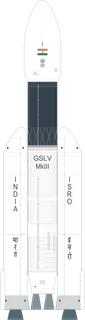
Launch Vehicle Mark-3 (GSLV Mk III)
Gaganyaan-1

ISRO's first uncrewed Gaganyaan flight (G1/OM-1) will send a crew module and service module to low Earth orbit on the human-rated LVM3 (HLVM3) from Satish Dhawan. The mission will carry the Vyommitra half-humanoid to check life-support systems, then demonstrate re-entry, parachute recovery, and splashdown as a precursor to crewed Indian spaceflight.
Orbit
LEO
Payload
Test Flight
Launch site
Satish Dhawan Space Centre, India
Satish Dhawan Space Centre Second Launch Pad

Demo Flight

South Korea's Agency for Defense Development will fly the first full four-stage Mir solid-fuel launcher from an offshore platform south of Jeju, targeting low Earth orbit. The ~500 kg-class quick-response military vehicle follows two 2022 suborbital tests and a 2023 three-stage orbital flight; later missions are meant to loft microsized spy satellites.
Provider
Agency for Defense DevelopmentOrbit
LEO
Payload
Test Flight
Launch site
Sea Launch
ADD Offshore launch platform

TDS-01
ISRO's PSLV-XL will loft TDS-01, a geostationary technology-demonstration satellite, toward GTO from Satish Dhawan's First Launch Pad. The spacecraft will prove about 35 new systems, led by an indigenous 300 mN electric thruster for orbit raising, plus atomic clocks, travelling-wave-tube amplifiers, and a quantum-key-distribution payload (QuTDS).
Orbit
GTO
Payload
Technology
Launch site
Satish Dhawan Space Centre, India
Satish Dhawan Space Centre First Launch Pad

Flight 15
SpaceX's 15th Starship test flight will fly Super Heavy Booster 22 and Ship 42, both V3 vehicles, from Orbital Launch Pad 2 at Starbase. The mission is intended to attempt the first catch of a V3 booster and the first catch of a Starship, after Booster 22 completed a full-duration 33-engine static fire.
Thursday, December 31
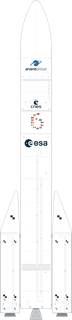
Metop-SG B1
First of EUMETSAT's MetOp Second Generation B-series weather satellites, built by Airbus, heading to sun-synchronous orbit to complement MetOp-SG-A1. The microwave-focused spacecraft carries a scatterometer, ice-cloud and microwave imagers, a radio-occultation sounder and Argos-4; it arrived at Kourou in October for an Ariane 62 flight.
Provider
ArianespaceOrbit
SSO
Payload
Earth Science
Launch site
Guiana Space Centre, French Guiana
Ariane Launch Area 4
SDA Tranche 2 Transport Layer D
Classified mission launched by the Space Development Agency (SDA) for Tranche 2 Transport Layer.
SDA Tranche 2 Transport Layer E
Classified mission launched by the Space Development Agency (SDA) for Tranche 2 Transport Layer.
Provider
SpaceXOrbit
PO
Payload
Government/Top Secret
Launch site
Vandenberg SFB, CA, USA
Space Launch Complex 4E
Launch Vehicle Mark-3 (GSLV Mk III)
GSAT-32 (GSAT-N3)
NSIL's third demand-driven communications satellite, GSAT-N3, will ride ISRO's LVM-3 to geostationary transfer orbit. The roughly 4,500 kg S-band spacecraft is funded entirely by NSIL to serve Indian government users.
Orbit
GTO
Payload
Communications
Launch site
Satish Dhawan Space Centre, India
Satish Dhawan Space Centre Second Launch Pad

Blue Ring-1
The first mission of Blue Ring, Blue Origin's all-in-one, high-powered hybrid solar electric and chemical propelled spacecraft, will test the spacecraft's operations in Geostationary Transfer Orbit (GTO), as well as subsequent operations after reaching Geostationary Orbit (GEO). It will carry one of Scout Space's flagship next-generation space domain awareness (SDA) Owl sensors, which is designed to enhance real-time tracking, characterization, and assessment of space objects by integrating advanced optical sensing, onboard artificial intelligence-driven processing, and autonomous decision-making capabilities to deliver domain-wide intelligence in space in support of the U.S. Space Force’s space control mission set. Blue Ring will also carry Optimum Technologies (OpTech)'s next-generation Caracal optical payload, which is designed to provide actionable insights on resident space objects and orbital activity and includes onboard image storage, object detection algorithms, and passive thermal control. The payload is designed to operate flexibly across dynamic orbits over a year-long mission profile. Several internal Blue Origin payloads will also be hosted.
Provider
Blue OriginOrbit
GTO
Payload
Space Situational Awareness
Launch site
Cape Canaveral SFS, FL, USA
Launch Complex 36A
BlueBird 14-16 (Block 2 #9-11)
Three of AST SpaceMobile's next-generation Block 2 BlueBird satellites (BlueBird 14, 15 and 16) will fly together on a Falcon 9 from Cape Canaveral. Each carries a roughly 2,400-square-foot phased array for direct-to-smartphone cellular broadband from low Earth orbit.
Provider
SpaceXOrbit
LEO
Payload
Communications
Launch site
Cape Canaveral SFS, FL, USA
Space Launch Complex 40
CHORUS
CHORUS is MDA's next generation Earth observation constellation, consisting of 2 radar satellites (C-band SAR and X-band SAR), in a 53.5 degree 600 km altitude LEO, with the X-band trailing the C-band by 60 minutes. A collaborative multi-sensor constellation, CHORUS will bring together diverse and unique imagery and data sources and provide a new level of near real-time insight and innovative Earth observation services. Operating in a unique mid-inclination orbit, CHORUS will be able to image day or night, regardless of weather conditions, with daily access of up to 95% of the coverage area. From an industry-leading 700km-wide imaging swath down to sub-metre high resolution, CHORUS will provide the most extensive and unrivalled Earth observation radar imaging capacity available on the market in a single mission.
Inmarsat-7 F1 (GX-7)
Falcon 9 will send Inmarsat-7 F1 (GX-7), the first of three Airbus OneSat spacecraft, toward geostationary transfer orbit from Cape Canaveral. The reconfigurable Ka-band satellite will add high-throughput Global Xpress broadband for ships, aircraft and other mobile users, with coverage and capacity adjustable in orbit.
SDA Tranche 1 Tracking Layer A
Space Development Agency Tranche 1 Tracking Layer mission, polar from Vandenberg, for the Proliferated Warfighter Space Architecture. The layer's 28 infrared missile-warning satellites, built by L3Harris and Northrop Grumman, will track hypersonic and other advanced threats; every T1 plane already on orbit is Transport Layer.
Provider
SpaceXOrbit
PO
Payload
Government/Top Secret
Launch site
Vandenberg SFB, CA, USA
Space Launch Complex 4E
SDA Tranche 1 Tracking Layer C
Tranche 1 Tracking Layer C is one of five missions by the United States Space Force Space Development Agency (SDA) for the Proliferated Warfighter Space Architecture (PWSA) Tranche 1 Tracking Layer constellation, which will provide global indications, warning, tracking, and targeting of advanced missile threats, including hypersonic missile systems.
Provider
SpaceXOrbit
PO
Payload
Government/Top Secret
Launch site
Vandenberg SFB, CA, USA
Space Launch Complex 4E
SDA Tranche 1 Tracking Layer D
Tranche 1 Tracking Layer D is one of five missions by the United States Space Force Space Development Agency (SDA) for the Proliferated Warfighter Space Architecture (PWSA) Tranche 1 Tracking Layer constellation, which will provide global indications, warning, tracking, and targeting of advanced missile threats, including hypersonic missile systems.
Provider
SpaceXOrbit
PO
Payload
Government/Top Secret
Launch site
Vandenberg SFB, CA, USA
Space Launch Complex 4E
SDA Tranche 1 Transport Layer D
A SpaceX Falcon 9 from Vandenberg will loft another Space Development Agency Tranche 1 Transport Layer plane into polar orbit. The PWSA Transport Layer provides resilient, low-latency military data over optical inter-satellite and Ka-band links; four of those T1 Transport missions were assigned to SpaceX under the FY23 NSSL order.
Provider
SpaceXOrbit
PO
Payload
Government/Top Secret
Launch site
Vandenberg SFB, CA, USA
Space Launch Complex 4E
SDA Tranche 1 Transport Layer F
Tranche 1 Transport Layer F is one of six missions by the United States Space Force Space Development Agency (SDA) for the Proliferated Warfighter Space Architecture (PWSA) Tranche 1 Transport Layer constellation, which will provide assured, resilient, low-latency military data and connectivity worldwide to the full range of warfighter platforms from Low Earth Orbit satellites. The constellation will be interconnected with Optical Inter-Satellite Links (OISLs) which have significantly increased performance over existing radio frequency crosslinks. It is expected to operate over Ka band, have stereo coverage and be dynamically networked for simpler hand-offs, greater bandwidth and fault tolerance.
Provider
SpaceXOrbit
PO
Payload
Government/Top Secret
Launch site
Vandenberg SFB, CA, USA
Space Launch Complex 4E

ConnectedCosmos Launch 1
First of at least four missions carrying 6 satellites for Open Cosmos' secure LEO broadband constellation, designed to provide independent and resilient connectivity infrastructure for Europe and the world using high-priority Ka-band spectrum filings by the Principality of Liechtenstein.
Provider
Firefly AerospaceOrbit
PO
Payload
Communications
Launch site
Vandenberg SFB, CA, USA
Space Launch Complex 2W
ConnectedCosmos Launch 2
Second of at least four missions carrying 6 satellites for Open Cosmos' secure LEO broadband constellation, designed to provide independent and resilient connectivity infrastructure for Europe and the world using high-priority Ka-band spectrum filings by the Principality of Liechtenstein.
Provider
Firefly AerospaceOrbit
PO
Payload
Communications
Launch site
Vandenberg SFB, CA, USA
Space Launch Complex 2W
1 x Pelican satellite
A dedicated Spectrum flight of one Planet Labs Pelican Earth-imaging satellite, about 160 kg, to sun-synchronous orbit from Andøya. Assembled at Planet's Berlin plant, it is planned as the first German-built satellite on a German-built rocket, with 50-centimeter-class imagery; further Pelicans are booked on later Spectrum flights.
ΣYNDEO-3
ΣYNDEO-3 is a satellite built by Redwire Corporation for the European Union/European Space Agency (ESA)’s In-Orbit Demonstration and In-Orbit Validation Programme (IOD/IOV), which will carry 10 different technological demonstration payload from institutions of Spain, France, Germany, Italy, Luxembourg and the European Commission. The satellite is built on Redwire's Hammerhead spacecraft platform.

Dream Chaser CRS 2 Flight 1
First flight of the Dream Chaser Spaceplane, on a free-flying mission in Low Earth Orbit.
Provider
United Launch AllianceOrbit
LEO
Payload
Test Flight
Launch site
Cape Canaveral SFS, FL, USA
Space Launch Complex 41
Globalstar 2-R Mission 2 (x 9)
The Globalstar global mobile communications network offers global, digital real time voice, data and fax services via its Low Earth Orbit satellite constellation. The constellation operates in a 1410 km orbit inclined at 52 degrees. In early 2022, Globalstar contracted with MDA for the construction of 17 new 2nd generation refresh satellites to replenish the existing constellation. Rocket Lab is sub-contracted to build the satellites' buses and the launch dispensers.
Provider
SpaceXOrbit
LEO
Payload
Communications
Launch site
Cape Canaveral SFS, FL, USA
Space Launch Complex 40
BlackSky Gen-3 6
A dedicated Electron from Mahia will loft one BlackSky Gen-3 Earth-imaging satellite, about 138 kg, with 50-centimeter optical imagery plus shortwave infrared. It is the first of four extra missions from Rocket Lab's 26 February 2026 add-on, bringing Electron flights for BlackSky since 2019 to 17.
Provider
Rocket LabOrbit
LEO
Payload
Earth Science
Launch site
Rocket Lab Launch Complex 1, Mahia Peninsula, New Zealand
BlackSky Gen-3 7
A dedicated Electron flight of one 138 kg BlackSky Gen-3 Earth-imaging satellite, with 50-centimeter resolution and a shortwave-infrared sensor. It is the second of four extra missions from Rocket Lab's February 2026 four-launch add-on, which brought the pair to 17 Electron flights since 2019.
Provider
Rocket LabOrbit
LEO
Payload
Earth Science
Launch site
Rocket Lab Launch Complex 1, Mahia Peninsula, New Zealand
BlackSky Gen-3 8
Dedicated Electron flight from Mahia with a single BlackSky Gen-3 Earth-imaging satellite, the third of four extra missions Rocket Lab booked in February 2026. The 50-centimeter-class spacecraft also carries shortwave infrared sensors for night and low-light imaging as BlackSky expands its real-time intelligence constellation.
Provider
Rocket LabOrbit
LEO
Payload
Earth Science
Launch site
Rocket Lab Launch Complex 1, Mahia Peninsula, New Zealand
BlackSky Gen-3 9
A dedicated Electron from Mahia will loft one BlackSky Gen-3 Earth-imaging satellite, about 138 kg, with 50-centimeter optical imagery plus shortwave infrared. It is the last of four extra missions from Rocket Lab's 26 February 2026 add-on, bringing Electron flights for BlackSky since 2019 to 17.
Provider
Rocket LabOrbit
LEO
Payload
Earth Science
Launch site
Rocket Lab Launch Complex 1, Mahia Peninsula, New Zealand
iQPS Launch 11
Synthetic aperture radar Earth observation satellite for Japanese Earth imaging company iQPS.
Provider
Rocket LabOrbit
LEO
Payload
Earth Science
Launch site
Rocket Lab Launch Complex 1, Mahia Peninsula, New Zealand
LOXSAT 1
A dedicated Electron from Mahia will loft Eta Space's NASA-funded LOXSAT-1, a Rocket Lab Photon hosting a nine-month cryogenic fluid-management demo. The payload will test liquid-oxygen storage, boiloff control, gauging and tank-to-tank transfer to inform Eta Space's planned Cryo-Dock orbital propellant depot.
Provider
Rocket LabOrbit
LEO
Payload
Technology
Launch site
Rocket Lab Launch Complex 1, Mahia Peninsula, New Zealand

JV-LOTUSat-1

Vietnamese Synthetic Aperture Radar Earth observation satellite build by NEC Corporation of Japan, based on Japan's ASNARO 2 satellite and the NEXTAR NX-300L satellite bus. The satellite will contribute to measures against natural disasters and climate change in Vietnam.
Orbit
SSO
Payload
Earth Science
Launch site
Uchinoura Space Center, Japan
Mu Center
Rivada 1
24 satellites for Rivada's internet constellation.
Rivada 10
A SpaceX Falcon 9 from Vandenberg will loft 24 Rivada Outernet satellites to polar orbit, one of 12 flights booked in 2023 for the first 300 of a planned 600-satellite laser-mesh network. The gateway-less constellation is meant to route traffic entirely in space; Rivada still planned a demo then 2027 operations, with financing still unannounced as of May 2026.
Rivada 11
24 satellites for Rivada's internet constellation.
Rivada 12
24 satellites for Rivada's internet constellation.
Rivada 2
One of twelve Falcon 9 flights Rivada booked in 2023 to deploy its Outernet, a laser-linked LEO mesh that routes traffic in orbit without terrestrial gateways. The Vandenberg polar load is 24 satellites toward a planned 600-spacecraft constellation; the company still intends a demonstration mission before operational service.
Rivada 3
24 satellites for Rivada's internet constellation.
Rivada 4
Another of twelve Falcon 9 flights in Rivada's 2023 SpaceX booking, sending 24 Outernet satellites to polar orbit from Vandenberg. The laser-mesh constellation is designed as a gateway-less orbital backbone for government and enterprise traffic; operational service is planned after a separate demonstration mission.
Rivada 5
24 satellites for Rivada's internet constellation.
Rivada 6
A Falcon 9 from Vandenberg will loft 24 Rivada Outernet satellites to polar orbit, one of 12 flights booked with SpaceX in 2023 toward a 600-satellite laser-mesh, gateway-less LEO network. The company still plans a 2026 demonstration before operational launches; this numbered flight is not that demo.
Rivada 7
A Falcon 9 from Vandenberg will loft 24 satellites for Rivada Space Networks' planned Outernet constellation. The polar-orbit spacecraft are designed to route traffic through an in-space laser mesh without terrestrial internet gateways.
Rivada 8
24 satellites for Rivada's internet constellation.
Rivada 9
Twenty-four Outernet satellites to polar orbit on one of twelve Falcon 9 flights from Rivada's March 2023 SpaceX booking, for the gateway-less laser-mesh network. The company still plans a demonstration before operations, and financing remained unannounced as of July 2026, so this flight is not identified as the demo.
SDA Tranche 2 Tracking Layer A
A Falcon 9 from Cape Canaveral will deliver Space Development Agency Tranche 2 Tracking Layer satellites to polar orbit. The infrared missile-warning spacecraft feed the Proliferated Warfighter Space Architecture, tracking ballistic and hypersonic threats; L3Harris, Lockheed Martin and Sierra Space are each building 18 of the 54-satellite layer.
SDA Tranche 2 Tracking Layer B
Classified mission launched by the Space Development Agency (SDA) for Tranche 2 Tracking Layer.
SDA Tranche 2 Transport Layer A
Classified mission launched by the Space Development Agency (SDA) for Tranche 2 Transport Layer.
Provider
SpaceXOrbit
PO
Payload
Government/Top Secret
Launch site
Vandenberg SFB, CA, USA
Space Launch Complex 4E
USSF-31
A classified U.S. Space Force payload on a Falcon 9 from Cape Canaveral, flown directly to geostationary orbit. USSF-31 was assigned to SpaceX under the June 2023 NSSL Phase 2 order that split twelve missions evenly with ULA, alongside USSF-114 on Vulcan; spacecraft identity remains undisclosed.
VICTUS SURGO
A new Tactically Responsive Space (TacRS) mission by the United States Space Force Space Systems Command to deliver responsive space delivery. The mission consists of an Impulse Space Mira orbital transfer vehicle that will operate in Geosynchronous Transfer Orbit (GTO), which would be transferred from Low Earth Orbit (LEO) on an Impulse Space Helios kick stage. A Helios rideshare payload will also be delivered to GEO.

USSF-75
Classified payload for the United States Space Force
Provider
SpaceXOrbit
Direct-GEO
Payload
Government/Top Secret
Launch site
Kennedy Space Center, FL, USA
Launch Complex 39A
TacSat
TacSat is an intelligence, surveillance and reconnaissance spacecraft with a mission to prove specialized sensing and communications capabilities on orbit. The satellite will participate in exercises that highlight cross-domain kill-web connectivity, enabling timely execution of tactical space missions. TacSat will host a proven Lockheed Martin infrared sensor on board that brings previously developed technology to space for the first time. This sensor produces high quality imagery and it can interface with federated Battle Management Command & Control (BMC2) combat systems to provide joint forces with a comprehensive view of threats. The satellite will also feature Lockheed Martin’s first 5G.MIL® payload on orbit. This provides cellular-like networking for military space assets, making satellite constellations more resilient. It also helps enable seamless connectivity with tools in the air, at sea and on land. Launch operation will also again demonstrate responsive space pre-launch operation capabilities.
Provider
Firefly AerospaceOrbit
LEO
Payload
Technology
Launch site
Vandenberg SFB, CA, USA
Space Launch Complex 2W

Demo Flight
Maiden flight of Orienspace's Gravity-2, a reusable two-stage kerosene-liquid-oxygen rocket designed for more than 20 reuses and about 21.5 tonnes to low Earth orbit. The debut is planned from Haiyang Oriental Spaceport; system-level ground tests are underway. No operational payload has been named for the demonstration.
Provider
Orienspace TechnologyOrbit
N/A
Payload
Test Flight
Launch site
Haiyang Oriental Spaceport
Unknown launch location

ETS-9
The Engineering Test Satellite 9 (ETS-9) is a JAXA project aimed to develop an advanced satellite bus, or common model, for various high-throughput satellites (HTS) for communications. The new satellite bus by Mitsubishi Electric will focus specifically on advanced communication needs: - Up to 25kW of power to support HTS communications - Light mass, all-electric bus system achieved with 6kW high-power Hall thrusters (Japan-made). - High-power Hall thrusters significantly shorten delivery of orbiting satellite compared to other manufacturer’s 4.5kW-class electric-propulsion bus systems - The first Japanese geostationary satellite equipped with GPS receivers (Japan-made) for laborsaving autonomous orbital transfer and orbital maneuvering.
Provider
Mitsubishi Heavy IndustriesOrbit
GTO
Payload
Communications
Launch site
Tanegashima Space Center, Japan
Yoshinobu Launch Complex LP-2
Leidos-3
The third of four dedicated HASTE suborbital flights Rocket Lab contracted with Leidos for the MACH-TB program. From Wallops Launch Complex 2, the Electron-derived vehicle will carry a hypersonic test payload for U.S. defense technology maturation.
Provider
Rocket LabLaunch site
Wallops Flight Facility, Virginia, USA
Rocket Lab Launch Complex 2 (Launch Area 0 C)
Leidos-4
Rocket Lab will fly a dedicated HASTE suborbital mission from Wallops Launch Complex 2 for Leidos under the MACH-TB program. The Electron-derived vehicle will carry a government hypersonic test payload on a high-speed trajectory from Virginia.
Provider
Rocket LabLaunch site
Wallops Flight Facility, Virginia, USA
Rocket Lab Launch Complex 2 (Launch Area 0 C)
Leidos-5
Provider
Rocket LabLaunch site
Wallops Flight Facility, Virginia, USA
Rocket Lab Launch Complex 2 (Launch Area 0 C)

Demo Flight
First test launch of i-Space’s Hyperbola-3 rocket.
Provider
i-SpaceOrbit
N/A
Payload
Test Flight
Launch site
Wenchang Space Launch Site, People's Republic of China
Commercial LC-2

Demo Flight
First test launch of CASC/CALT’s Long March 10A rocket. Payload is expected to be a prototype of the Low Earth Orbit mission version of the Mengzhou crew spacecraft.
Orbit
N/A
Payload
Test Flight
Launch site
Wenchang Space Launch Site, People's Republic of China
301

Flight 2
Second test launch of CASC/SAST’s Long March 12A rocket. Payload identities are TBD.
Orbit
LEO
Payload
Test Flight
Launch site
Jiuquan Satellite Launch Center, People's Republic of China
Long March 12 series Pad
Amazon Leo (LN-01)
Amazon Leo, formerly known as Project Kuiper, is a mega constellation of satellites in Low Earth Orbit that will offer broadband internet access, this constellation will be managed by Kuiper Systems LLC, a subsidiary of Amazon. This constellation is planned to be composed of 3,276 satellites. The satellites are projected to be placed in 98 orbital planes in three orbital layers, one at 590 km, 610 km and 630 km altitude. 48 satellites will be carried on this New Glenn launch.
Provider
Blue OriginOrbit
LEO
Payload
Communications
Launch site
Cape Canaveral SFS, FL, USA
Launch Complex 36A
BlueBird Block 2
AST SpaceMobile’s Block 2 BlueBird satellites are designed to deliver up to 10 times the bandwidth capacity of the BlueBird Block 1 satellites, required to achieve 24/7 continuous cellular broadband service coverage in the United States, with beams designed to support a capacity of up to 40 MHz, enabling peak data transmission speeds up to 120 Mbps, supporting voice, full data and video applications. The Block 2 BlueBirds, featuring as large as 2400 square foot communications arrays, will be the largest satellites ever commercially deployed in Low Earth orbit once launched. This launch will feature 8 satellites.
Provider
Blue OriginOrbit
LEO
Payload
Communications
Launch site
Cape Canaveral SFS, FL, USA
Launch Complex 36A

Maiden Flight
First flight of the RFA One launch vehicle. Will carry 7 satellites for various companies and organizations coordinated by the German Aerospace Center (DLR). * AllBertEinStein * ARTICA * Curium Two * ERMINAZ * PCIOD * Separation Ring Mission * SpaceDREAM
Provider
Rocket Factory AugsburgOrbit
SSO
Payload
Test Flight
Launch site
SaxaVord Spaceport
Launch Pad Fredo
Cassini
Three small satellites hosting payloads for companies across Europe as part of the ESA-European Union IOD (In-Orbit Demonstration) and IOV (In-Orbit Verification) programs.

AayulSAT-1A & others
Ride-share launch of multiple satellites, including the in-orbit refueling demonstration satellite AayulSAT-1A from OrbitAID Aerospace. Other payload's identities TBD.
Orbit
LEO
Payload
Technology
Launch site
Satish Dhawan Space Centre, India
Satish Dhawan Space Centre First Launch Pad

Intelsat-1
First Intelsat satellite under Relativity Space's 2023 multi-launch agreement, flying on Terran R from Cape Canaveral LC-16. Terran R is Relativity's reusable methane-fueled medium-to-heavy rocket, with 3D-printed Aeon engines, sized for LEO constellations and GTO; a separate demo flight is also on the manifest.
Provider
Relativity SpaceOrbit
N/A
Payload
Communications
Launch site
Cape Canaveral SFS, FL, USA
Launch Complex 16
Mars Lander
Impulse Space's Mars Lander is designed to support research and development needed for human exploration of Mars.
Provider
Relativity SpaceOrbit
Mars
Payload
Planetary Science
Launch site
Cape Canaveral SFS, FL, USA
Launch Complex 16

Unknown Launch Vehicle
Owlet-01

Telescope satellite for Scout Space, a startup specializing in space domain awareness through in-space observation.
Unknown Launch Vehicle
VCLS Demo 2 Mission One
NASA's Venture Class Launch Services Demo 2 Mission One will send a single 30 kg NASA payload to a 500 km, 41° low Earth orbit from Cape Canaveral. Originally awarded to Relativity Space's Terran 1, the launch vehicle is now uncertain after that rocket's retirement.

IRIDE 1

First dedicated launch for the European Space Agency's IRIDE Earth observation constellation.
Provider
Avio S.p.AOrbit
SSO
Payload
Earth Science
Launch site
Guiana Space Centre, French Guiana
Ariane Launch Area 1 (ELV)
IRIDE 2
Second dedicated launch for the European Space Agency's IRIDE Earth observation constellation.
Provider
Avio S.p.AOrbit
SSO
Payload
Earth Science
Launch site
Guiana Space Centre, French Guiana
Ariane Launch Area 1 (ELV)
Vulcan
NROL-100
A classified National Reconnaissance Office mission on a Vulcan from Vandenberg SLC-3E. It is one of five NRO flights in ULA's FY24 final-year NSSL Phase 2 order, with NROL-73, NROL-56, NROL-109 and SILENTBARKER 2; the payload and orbit remain undisclosed.
Provider
United Launch AllianceOrbit
N/A
Payload
Government/Top Secret
Launch site
Vandenberg SFB, CA, USA
Space Launch Complex 3E
Vulcan
NROL-109
A classified National Reconnaissance Office payload on a ULA Vulcan from Cape Canaveral SLC-41. NROL-109 is one of five NRO missions assigned to ULA in the FY24, final-year NSSL Phase 2 order, alongside NROL-73, NROL-56, NROL-100 and SILENTBARKER 2. Payload, manufacturer and destination remain undisclosed.
Provider
United Launch AllianceOrbit
N/A
Payload
Government/Top Secret
Launch site
Cape Canaveral SFS, FL, USA
Space Launch Complex 41
Vulcan
NROL-56
A classified National Reconnaissance Office payload will fly on ULA's Vulcan from Cape Canaveral SLC-41. The mission was assigned in the Space Force's FY24 NSSL Phase 2 order; the spacecraft and target orbit have not been disclosed.
Provider
United Launch AllianceOrbit
N/A
Payload
Government/Top Secret
Launch site
Cape Canaveral SFS, FL, USA
Space Launch Complex 41
Vulcan
NROL-64
Classified payload for the US National Reconnaissance Office
Provider
United Launch AllianceOrbit
N/A
Payload
Government/Top Secret
Launch site
Cape Canaveral SFS, FL, USA
Space Launch Complex 41
Vulcan
NROL-73
A classified National Reconnaissance Office payload will ride a ULA Vulcan from Vandenberg SLC-3E. NROL-73 is one of five NRO missions in ULA's 11-flight FY24 final-year NSSL Phase 2 order, assigned in October 2023; payload and orbit remain undisclosed.
Provider
United Launch AllianceOrbit
N/A
Payload
Government/Top Secret
Launch site
Vandenberg SFB, CA, USA
Space Launch Complex 3E
Vulcan
NROL-83
Classified payload for the US National Reconnaissance Office
Provider
United Launch AllianceOrbit
N/A
Payload
Government/Top Secret
Launch site
Vandenberg SFB, CA, USA
Space Launch Complex 3E
Vulcan
SDA Tranche 1 Tracking Layer B
A ULA Vulcan from Vandenberg will loft one Space Development Agency Tranche 1 Tracking Layer plane into polar orbit, among the first PWSA infrared missile-warning missions. L3Harris and Northrop Grumman each build 14 Tracking satellites across two seven-satellite planes; this flight is one of ULA's two Western-range Tracking Layer NSSL assignments.
Provider
United Launch AllianceOrbit
PO
Payload
Government/Top Secret
Launch site
Vandenberg SFB, CA, USA
Space Launch Complex 3E
Vulcan
SDA Tranche 1 Tracking Layer E
Tranche 1 Tracking Layer E is one of five missions by the United States Space Force Space Development Agency (SDA) for the Proliferated Warfighter Space Architecture (PWSA) Tranche 1 Tracking Layer constellation, which will provide global indications, warning, tracking, and targeting of advanced missile threats, including hypersonic missile systems.
Provider
United Launch AllianceOrbit
PO
Payload
Government/Top Secret
Launch site
Vandenberg SFB, CA, USA
Space Launch Complex 3E
Vulcan
SDA Tranche 2 Transport Layer B
ULA's Vulcan will loft Space Development Agency Tranche 2 Transport Layer B, one of the first three T2 Transport Layer missions, into polar orbit from Vandenberg. The PWSA transport satellites provide low-latency military data links worldwide over optical inter-satellite links.
Provider
United Launch AllianceOrbit
PO
Payload
Government/Top Secret
Launch site
Vandenberg SFB, CA, USA
Space Launch Complex 3E
Vulcan
SILENTBARKER 2/NROL-118
Space domain awareness mission for the US Department of Defense.
Provider
United Launch AllianceOrbit
Direct-GEO
Payload
Government/Top Secret
Launch site
Cape Canaveral SFS, FL, USA
Space Launch Complex 41
Vulcan
USSF-114
A classified U.S. Space Force National Security Space Launch mission will fly on ULA's Vulcan from Vandenberg SLC-3E. Assigned in the June 2023 NSSL Phase 2 FY23 order, the payload has not been publicly identified.
Provider
United Launch AllianceOrbit
N/A
Payload
Government/Top Secret
Launch site
Vandenberg SFB, CA, USA
Space Launch Complex 3E
Vulcan
USSF-16
Classified payload for the US Space Force.
Provider
United Launch AllianceOrbit
N/A
Payload
Government/Top Secret
Launch site
Cape Canaveral SFS, FL, USA
Space Launch Complex 41
Vulcan
USSF-23
ULA Vulcan will send three U.S. Space Force GEO servicing craft from Cape Canaveral SLC-41: Astroscale's Provisioner refueler, Orbit Fab's fuel depot, and Starfish Space's Otter tug. Provisioner will refuel AFRL Tetra-5 satellites then top up from the depot; Otter will dock with an unprepared satellite and move it to a disposal orbit.
Provider
United Launch AllianceOrbit
N/A
Payload
Government/Top Secret
Launch site
Cape Canaveral SFS, FL, USA
Space Launch Complex 41
Vulcan
USSF-43
Classified payload for the US Space Force.
Provider
United Launch AllianceOrbit
N/A
Payload
Government/Top Secret
Launch site
Cape Canaveral SFS, FL, USA
Space Launch Complex 41
Vulcan
USSF-57
First of three Next Generation Overhead Persistent Infrared geostationary satellites designed for missile warning.
Provider
United Launch AllianceOrbit
GTO
Payload
Government/Top Secret
Launch site
Cape Canaveral SFS, FL, USA
Space Launch Complex 41
Vulcan
WGS-11
Boeing's WGS-11+, the eleventh Wideband Global SATCOM spacecraft for the U.S. Space Force, on a Vulcan from Cape Canaveral toward geosynchronous orbit. It hosts Boeing's Protected Tactical SATCOM prototype payload for anti-jam Protected Tactical Waveform demonstrations and is the first WGS satellite assigned to Vulcan.
Provider
United Launch AllianceOrbit
GSTO
Payload
Communications
Launch site
Cape Canaveral SFS, FL, USA
Space Launch Complex 41
